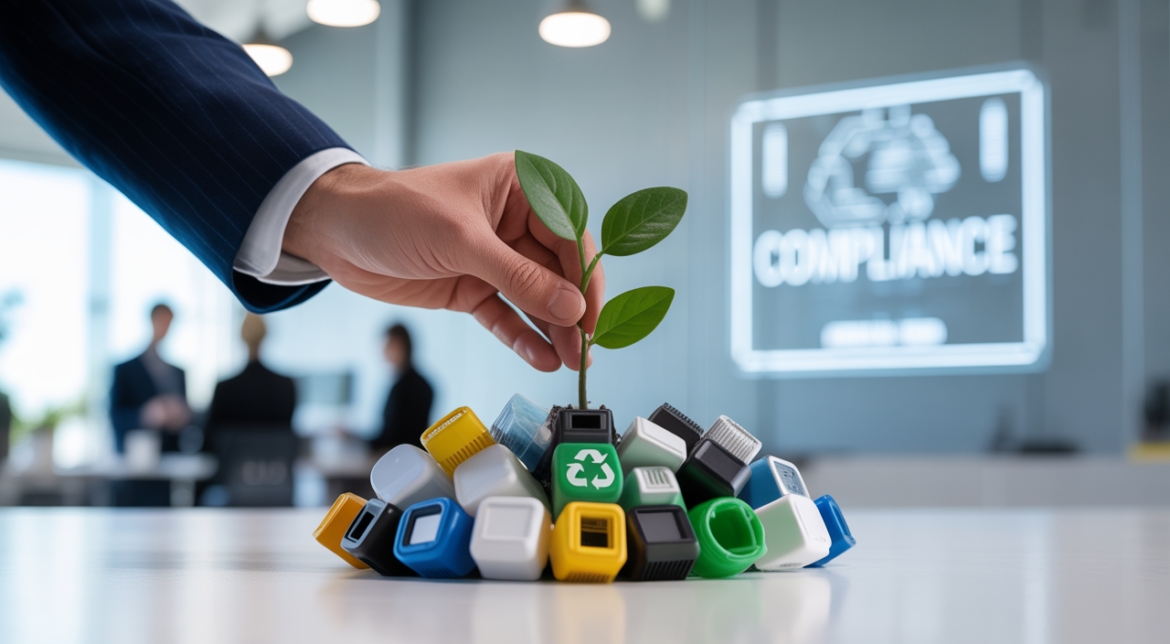
Do you manufacture, import, or sell products that generate waste? If so, understanding EPR Registration is vital for your business. It is a key step towards environmental responsibility and legal compliance in many countries, including India. Getting your EPR Registration ensures you meet specific waste management rules. This guide will walk you through everything you need to know about this important process.
EPR stands for Extended Producer Responsibility. It means that producers, importers, and brand owners are responsible for managing their products’ end-of-life cycle. This includes collection, transportation, and environmentally sound disposal or recycling of waste generated by their products. The goal is to reduce environmental pollution and promote a circular economy.

Why EPR Registration is Crucial for Your Business & the Environment
Securing an EPR Certificate is more than just a legal formality. It offers significant advantages for your business and the planet. Companies that comply showcase a strong commitment to sustainability.
Legal Compliance & Risk Mitigation
Ignoring EPR requirements can lead to serious consequences. Governments worldwide are enforcing strict penalties, fines, and even operational shutdowns for non-compliant businesses. Obtaining EPR Registration helps you avoid these costly legal challenges and keeps your operations smooth.
Enhanced Brand Reputation
Consumers are increasingly conscious of environmental issues. By actively participating in EPR, your brand demonstrates a commitment to a greener future. This boosts public trust and enhances your reputation in the market.
Access to Markets
For many industries, having an EPR Certificate is a prerequisite. It can be essential for entering new markets, securing government tenders, or partnering with large retailers. Compliance opens up more business opportunities.
Contribution to Sustainability Goals
EPR directly supports national and global sustainability efforts. It helps divert waste from landfills, promotes recycling, and conserves natural resources. Your business becomes a part of the solution to pressing environmental challenges.
Essential Documents for Your EPR Certificate Application
Preparing the right documents is a critical step in the EPR Registration process. Any missing or incorrect information can delay your application. It’s important to gather everything carefully before you begin.
Here’s a list of common documents you will need:
- Your Company’s PAN Card
- GST Certificate
- Aadhaar Card and PAN Card of the Authorized Signatory
- Factory License or Consent to Operate (CTO)
- Import Export Code (IEC) (if you are an importer)
- A detailed list of products for which you need EPR Registration. This includes quantities and categories.
- Information about your recycling partners or Producer Responsibility Organizations (PROs), if applicable.
- Undertakings or declarations, for example, about your EPR plan.
- Proof of your registered office address.
- Bank Statement for financial verification.
- Any other specific documents required for your waste category (e.g., BIS certification for electronics).
How Long is Your EPR Certificate Valid? Understanding Renewal & Maintenance
An EPR Certificate is not a one-time achievement. It has a specific validity period, which can vary depending on the type of waste and the country’s regulations. Typically, it might be valid for 3-5 years.
It is crucial to be aware of your certificate’s expiration date. Timely renewal ensures continuous compliance and avoids any interruptions to your business operations. Remember, maintaining EPR status also involves ongoing reporting requirements after you receive your registration.
Your Step-by-Step Guide to a Smooth EPR Registration Process
The EPR Registration process might seem complicated, but it can be straightforward with proper guidance. Here’s a general step-by-step overview to help you navigate it effectively.
Step 1: Determine Applicability
First, figure out if your business falls under EPR regulations. This means identifying if you are a producer, importer, or brand owner of regulated products like electronics, plastics, or batteries.
Step 2: Categorize Products
Clearly identify the types of products you deal with and their corresponding waste streams. This could be e-waste, plastic waste, battery waste, or tire waste, as each has specific rules.
Step 3: Prepare Documentation
Gather all the necessary documents mentioned in the previous section. Ensure all details are accurate and complete to prevent delays.
Step 4: Develop an EPR Plan
Outline how you will fulfill your responsibilities. This includes details about how you will collect, transport, and recycle your products’ waste. Often, this involves partnering with authorized recyclers or Producer Responsibility Organizations (PROs).
Step 5: Online Application Submission
Submit your application through the official government portal, such as the Central Pollution Control Board (CPCB) website in India. Fill out all required forms digitally.
Step 6: Scrutiny & Follow-up
The authorities will review your application. Be prepared to address any queries or requests for additional information promptly. This step ensures all details are verified.
Step 7: Grant of EPR Certificate
Once your application is approved, you will receive your official EPR Certificate. This document confirms your compliance and authorization to operate.
Step 8: Post-Registration Compliance
EPR compliance is an ongoing journey. You will need to submit annual reports and meet specific recycling targets. Maintaining this commitment is vital for long-term success. While this process can seem daunting, expert assistance can simplify obtaining your EPR certificate.
Don’t Trip Up: A Checklist of Common EPR Registration Mistakes
Even small errors can cause significant delays in your EPR Registration. Being aware of common pitfalls can help you avoid them.
Here’s a checklist of mistakes to watch out for:
- Incomplete or Incorrect Documentation: Make sure every document is perfectly filled and submitted.
- Misclassifying Products or Waste Streams: Correctly identify what waste your products generate to comply with specific rules.
- Failure to Identify All Responsible Entities: Ensure all parts of your business that fall under EPR are covered.
- Not Having a Robust EPR Plan: A clear, actionable plan for waste management is crucial. This often includes formal tie-ups with PROs.
- Missing Deadlines for Application or Renewal: Always keep track of submission and renewal dates.
- Ignoring Post-Registration Compliance Requirements: Ongoing reporting and meeting recycling targets are just as important as the initial registration.
- Attempting to Navigate Complex Regulations Without Expert Guidance: Regulations can be dense. Professional help can save you time and stress.
- Assuming a “One-Size-Fits-All” Approach: EPR rules differ by product type and quantity. What works for one might not work for another. For more insights on efficient business management, consider how modern tools can help streamline various compliance processes. Learn about streamlining business operations with advanced software.
The High Cost of Non-Compliance: Risks and Penalties for Missing EPR Registration
Ignoring EPR Registration can have severe consequences for your business. The risks extend far beyond a simple warning.
Legal Penalties & Fines
Regulatory bodies impose substantial financial penalties for non-compliance. These fines can quickly add up, affecting your company’s bottom line. Specific laws govern these penalties, and they vary by waste type.
Business Disruptions
Without proper EPR certification, your ability to operate might be restricted. Authorities can prevent you from selling products, participating in tenders, or even continuing your manufacturing processes. This can lead to significant business losses and delays.
Reputational Damage
Non-compliance can severely harm your brand’s image. Negative public perception and a loss of consumer trust can be difficult to recover from. Modern consumers value companies that are environmentally responsible.
Seizure of Goods/Operations
In extreme cases, regulatory bodies may seize your products or halt your operations entirely. Such actions are very disruptive and costly, emphasizing the imperative of timely EPR registration. Understanding the wider business impact of technology can also highlight the growing importance of digital compliance in today’s market.
Understanding the Investment: A Look at EPR Registration Costs
The cost involved in EPR Registration is not fixed. It varies based on several factors. These include the type of waste, the scale of your operations, and whether you opt for professional assistance.
Here’s a rough estimate of potential costs:
| Cost Category | Rough Range (INR) | Description |
|---|---|---|
| Government Fees | ₹10,000 – ₹50,000+ | Official application and authorization fees, which depend on waste type and operational capacity. |
| Documentation & Filing | ₹5,000 – ₹20,000 | Costs for preparing and submitting all required documents, if done internally or with basic help. |
| Professional Service Fees | ₹20,000 – ₹1,00,000+ | Fees for expert consultation, end-to-end management, and ongoing compliance support. |
| PRO/Recycling Charges | Variable (volume-dependent) | Costs associated with fulfilling recycling targets, typically paid to Producer Responsibility Organizations based on the volume of waste. |
Please note these are estimates, and actual costs can differ. Investing in professional services often provides excellent value by saving time and avoiding costly mistakes.
Simplify Your EPR Journey: How ELT Corporate Pvt. Ltd. Can Assist
Navigating the complexities of EPR Registration can be overwhelming. This is where ELT Corporate Pvt. Ltd. steps in as your reliable partner. We are dedicated to making your compliance journey smooth and stress-free.
ELT Corporate Pvt. Ltd. offers comprehensive services, including expert consultation to assess your exact needs. We provide end-to-end document preparation and verification, ensuring accuracy. Our team handles seamless online application filing and diligently follows up with authorities on your behalf. We also assist with developing a robust EPR plan and setting up necessary tie-ups with PROs. Furthermore, we guide you on post-registration compliance and timely renewals, ensuring you stay compliant year after year. Partner with us to save time, effort, and avoid common mistakes.
Your Path to EPR Compliance Starts Here
EPR Registration is more than just a regulatory hurdle; it’s an opportunity to demonstrate your business’s commitment to a sustainable future. Timely compliance offers legal protection, enhances your brand, and contributes positively to the environment. Ignoring it carries significant risks and penalties.
While the process can seem complex, it is entirely manageable with the right approach and expert support. Don’t navigate the complexities of EPR Registration alone. Partner with ELT Corporate Pvt. Ltd. for a hassle-free and compliant process. Ready to secure your EPR certificate and ensure peace of mind? Visit eprcertificate.com to connect with ELT Corporate Pvt. Ltd. and initiate your registration today.
Frequently Asked Questions About EPR Registration
Q1: What is EPR Registration?
A1: EPR Registration is a mandatory authorization for producers, importers, and brand owners. It requires them to take responsibility for managing the end-of-life of their products, such as e-waste or plastic packaging. This ensures proper collection, recycling, and disposal.
Q2: Who needs an EPR Certificate?
A2: Any entity that manufactures, imports, or sells products that fall under specific waste management rules needs an EPR Certificate. This typically includes businesses dealing with electrical and electronic equipment, plastic packaging, batteries, and tires.
Q3: How long does EPR Registration typically take?
A3: The process usually takes between 30-60 working days. This timeframe can vary depending on the completeness of your documentation and how quickly the regulatory authorities process applications.